Why Understanding Human Behavior Matters
Sandra once spent an entire week convinced her coworker hated her. The short replies. The lack of eye contact. The way she rushed past without saying hello. It turned out her coworker was going through a divorce and barely noticed anyone around her. That moment taught Sandra something important: psychology facts on human behavior are not just interesting trivia. They are essential tools for understanding the people around us.
The human brain is a strange and beautiful thing. It makes snap judgments in milliseconds. It processes emotions before logic even gets a chance. And it often tricks us into believing things that are not quite true.
Here is an informative video that shows psychology facts about human behavior
This article explores 15 psychology facts that reveal why people act the way they do. Some of these facts might surprise you. Others might finally explain that one thing your partner, friend, or boss keeps doing. Either way, understanding these patterns can transform relationships, improve decision-making, and build deeper self-awareness.
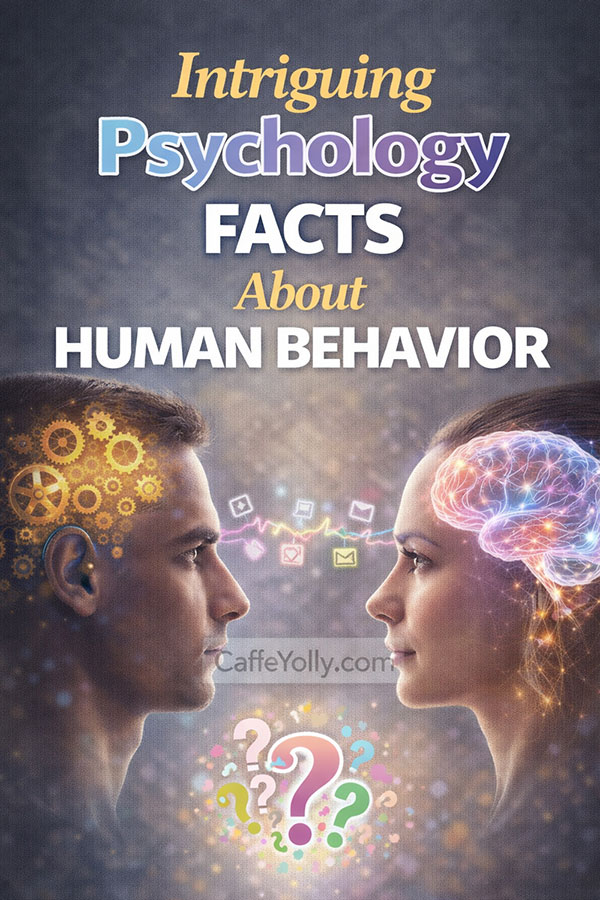
1. Your Brain Detects Negative Words Faster Than Positive Ones
The human brain is wired for survival, not happiness. This means it scans for threats before anything else. Research shows the brain processes negative words like “danger” or “angry” faster than positive words like “happy” or “peaceful.”
This explains why negative news headlines grab attention so quickly. It also explains why one critical comment sticks in someone’s mind longer than ten compliments. The brain is simply doing its job: keeping people alive by spotting potential threats first.
2. Mirror Neurons Make You ‘Feel’ What Others Feel
Ever wonder why yawning is contagious? Or why watching someone get hurt makes you wince? The answer lies in mirror neurons.
These special brain cells fire both when someone performs an action and when they watch someone else perform that action. Discovered in the 1990s, mirror neurons explain a lot about human connection. They are the brain’s empathy engine, helping people understand others without words.
This is why effective communication goes beyond just talking. Body language, facial expressions, and emotional energy all get picked up by these neurons. When someone feels anxious, the people around them often feel it too, even without knowing why.
3. Only 5-10% of Your Decisions Are Actually Rational
Most people believe they make logical choices. The truth? Research suggests only about 5-10% of decisions are truly rational. The rest are driven by emotion, habit, or instinct.
Psychologists call this System 1 thinking: fast, automatic, and emotional. System 2 thinking (slow, deliberate, logical) requires effort. The brain prefers the easy route.
This explains impulse purchases, sudden relationship decisions, and that time someone swore they would start exercising on Monday but did not. Developing critical thinking skills can help activate System 2 more often. But fighting the brain’s natural shortcuts takes practice.
4. Talking to Yourself Out Loud Actually Makes You Smarter
Sandra used to feel embarrassed when caught talking to herself. Not anymore. Research shows that speaking thoughts out loud improves focus, memory, and problem-solving.
When someone verbalizes a problem, it transforms from an abstract thought into a concrete instruction. The brain processes spoken words differently than silent ones. Athletes, surgeons, and scientists use this technique regularly.
So the next time someone catches you narrating your grocery list out loud? Just smile. You are not losing your mind. You are using it more effectively.
5. The Halo Effect: Attractive People Are Assumed to Be More Capable
The halo effect is a sneaky cognitive bias. It makes people assume that someone who is attractive, friendly, or well-dressed must also be intelligent, trustworthy, and capable. No evidence required.
Studies show this bias affects hiring decisions, courtroom judgments, and even teacher expectations of students. Good-looking defendants receive lighter sentences. Attractive job candidates get more callbacks.
Recognizing this bias is the first step to countering it. When evaluating someone, pause and ask: am I judging their actual skills, or just their appearance?
6. Multitasking Is a Myth That’s Draining Your Brain
The brain cannot truly multitask. What it actually does is rapidly switch between tasks. And every switch comes with a cost.
Research shows that task-switching reduces efficiency by up to 40%. The brain needs time to refocus each time it changes direction. This is why someone checking emails while on a call often misses important details in both.
7. Emotional Memories Stick Longer Than Facts
Ask someone what they learned in high school history class. They might remember a few dates. Now ask them about their first heartbreak. They will remember every detail.
The amygdala, the brain’s emotional center, tags memories with emotional weight. The stronger the emotion, the stronger the memory. This is why people rarely forget how someone made them feel, even if they forget what was said.
Understanding your emotional patterns can help make sense of why certain memories linger while others fade. The brain is not broken. It is just prioritizing survival over trivia.
8. Babies Can Imitate Behavior Just Weeks After Birth
Newborns are already learning. Research shows that babies as young as two to three weeks old can imitate facial expressions. Stick out your tongue, and a baby will often stick out theirs.
This early imitation suggests mirror neurons are active from birth. It also means that the environment around a baby matters deeply from day one. Positive parenting approaches are not just nice to have. They shape brain development from the earliest moments of life.
9. Time Feels Like It’s Speeding Up Because Your Brain Is on Autopilot
Remember how summer vacation felt endless as a child? Now years seem to blur together. This is not imagination. It is how the brain processes novelty.
When the brain encounters new experiences, it pays close attention and creates detailed memories. When life becomes routine, the brain goes on autopilot. Fewer new memories mean time seems to pass faster.
The fix? Seek new experiences. Travel. Learn something unfamiliar. Break routines occasionally. The brain will start paying attention again, and time will feel richer.
10. Different Emotions Lead to Different Risk-Taking Behaviors
Anger makes people take more risks. Anxiety makes them avoid risks entirely. Excitement encourages impulsive choices. Emotions do not just color decisions. They fundamentally shape them.
This is why important financial choices should never be made while upset. It is also why better financial decision-making requires emotional awareness. Someone feeling angry after a bad day is more likely to make a risky investment. Someone anxious might never invest at all.
11. Red and Yellow Are Easier to Remember Than Blue and Green
Color affects memory more than most people realize. Studies show that warm colors like red and yellow grab attention and stick in memory better than cool colors like blue and green.
Warm colors increase arousal and alertness. This is why stop signs are red and caution signs are yellow. It is also why fast food logos use these colors: they want to be remembered.
Students can use this knowledge to highlight important information in warm colors. Marketers already know it. Now everyone can use it intentionally.
12. Your Brain Can Be Tricked Into Changing Habits in Just One Hour
The brain is more flexible than most people think. Research on neuroplasticity shows that mirror neurons can be retrained in surprisingly short timeframes. Some studies suggest that significant changes can begin in as little as one hour of focused practice.
This does not mean habits change overnight. But it does mean the brain is always ready to learn. Every time someone practices a new behavior, they strengthen neural pathways. Consistency matters more than intensity.
13. Learned Helplessness Can Make You Give Up Before You Try
In the 1960s, psychologist Martin Seligman discovered something troubling. After repeated negative experiences, subjects stopped trying to escape bad situations, even when escape became possible. He called this learned helplessness.
This pattern shows up in depression, toxic relationships, and unfulfilling jobs. Someone who has failed repeatedly may stop trying, even when circumstances change. Breaking this cycle requires recognizing it first.
The good news? Learned helplessness can be unlearned. Small wins build confidence. New experiences challenge old beliefs. And managing anxiety effectively can help people take those first steps toward change.
14. Social Media Breaks Improve Mental Health More Than You Think
Social media is designed to be addictive. It also triggers constant comparison. Research shows that taking breaks from social platforms reduces anxiety and improves overall well-being.
The brain was not built for endless scrolling. It was built for real connection, face-to-face conversations, and present-moment awareness. When screens replace these, mental health suffers.
Even short breaks help. A weekend without Instagram. An evening without checking notifications. The brain will thank you.
15. People Quickly Fall Into Assigned Roles (Even Fake Ones)
The Stanford Prison Experiment remains one of psychology’s most famous studies. Regular college students were assigned roles as guards or prisoners. Within days, guards became authoritarian. Prisoners became submissive. The experiment had to be stopped early.
This shows how powerfully situations shape behavior. People are not fixed. They adapt to roles and environments. This explains workplace dynamics, family patterns, and why someone acts differently with different groups.
Understanding this helps with self-awareness. If a role brings out the worst in someone, it might be the role that needs changing, not the person.
How Understanding These Psychology Facts Changes Your Daily Life
These fifteen psychology facts on human behavior are more than interesting trivia. They are practical tools for living better.
Understanding why the brain prioritizes threats helps manage reactions to negative news. Knowing about mirror neurons improves empathy and communication. Recognizing that most decisions are emotional, not rational, leads to better choices.
Sandra wishes she had known these facts years ago. That week spent thinking her coworker hated her? It could have been avoided with a bit more psychological awareness. Now, when someone acts strangely, she pauses before assuming the worst.
The brain is complex, but it is not mysterious. Science has unlocked many of its secrets. The more people understand about how the mind works, the better equipped they are to navigate relationships, make smarter decisions, and build more meaningful lives.
Want to dive deeper into understanding yourself and others? Explore more articles on emotional wellness, communication skills, and personal growth right here on the site.